
Medical waste
Regulated medical waste
Biohazard, sharps and infectious waste, handled by our Bio Med Solutions division.
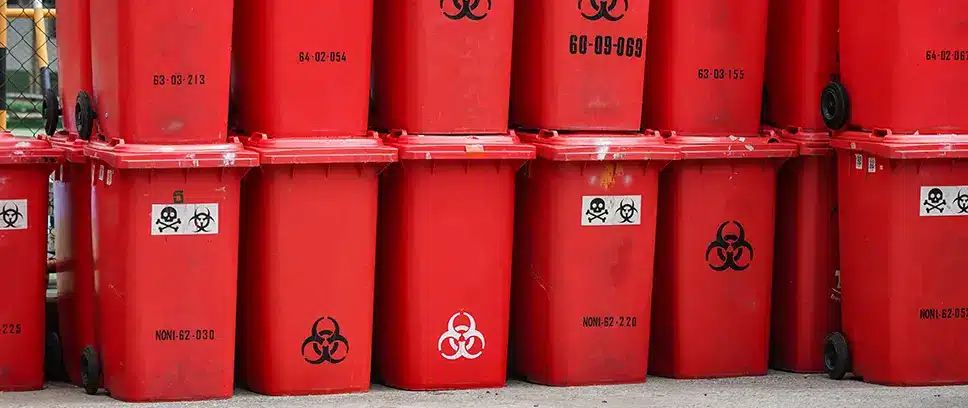
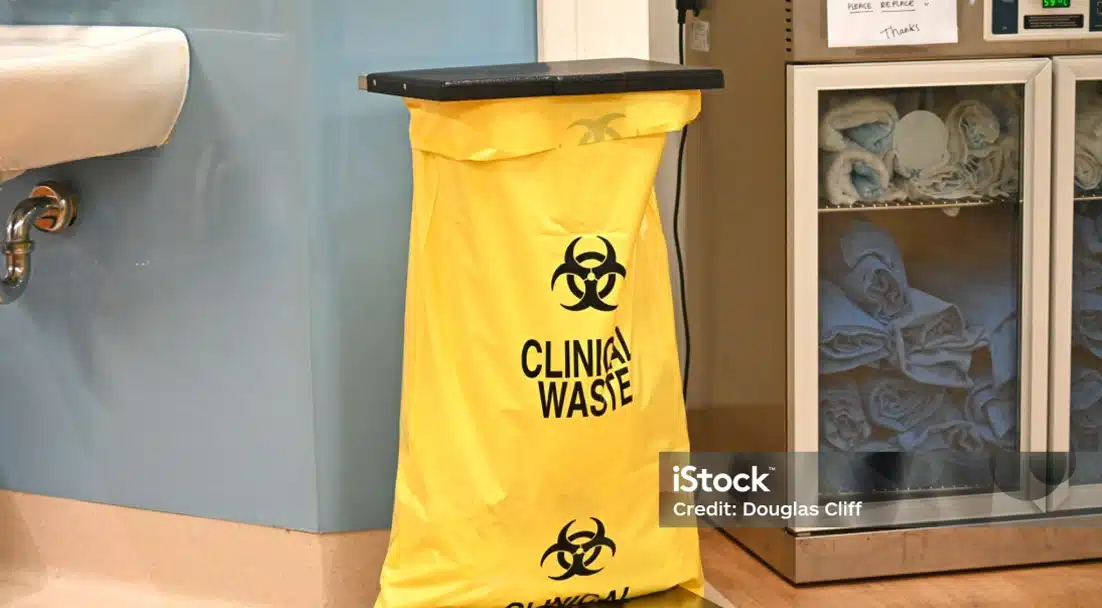
Regulated medical waste covers material contaminated with blood or other potentially infectious material. It is regulated by state programmes rather than federally under RCRA, and is collected for Greer clients by Bio Med Solutions.
Source: State medical waste programmes; 29 CFR 1910.1030 for bloodborne pathogensWhat counts as regulated medical waste
- Sharps, including needles, scalpels, lancets and broken glassware
- Blood and body fluids in quantities that could release if compressed
- Items saturated or dripping with blood or infectious material
- Pathological waste, including tissues and organs
- Cultures, stocks and laboratory specimens
- Contaminated animal carcasses and bedding from research
Definitions differ by state. Items regulated in one state can be ordinary solid waste in another, so the applicable state programme sets the boundary rather than a general rule.
Medical waste is not RCRA waste
Regulated medical waste is governed by state programmes and by OSHA bloodborne pathogen rules, not by RCRA. A hospital generates both, and they take entirely different routes with different documentation.
The overlap causes most of the confusion. A chemotherapy vial can be both regulated medical waste and RCRA hazardous waste, and the hazardous determination governs. Getting that split right is the practical value of having one organization looking at both.
Scheduled collection
Bio Med Solutions handles regulated medical waste collection for Greer clients across South Alabama, South Mississippi and the Florida Panhandle, with prepaid mail back kits for sites outside the routes.
Visit Bio Med SolutionsCommon questions
Is medical waste hazardous waste?
Not under RCRA. Regulated medical waste is governed by state programmes. Some items are both, most commonly certain chemotherapy agents and pharmaceuticals, and the RCRA determination governs where they overlap.
How is it treated?
Usually autoclaving or incineration, depending on the stream and the state. Pathological waste generally requires incineration rather than autoclaving.
What if I only generate a little?
Prepaid mail back kits exist for exactly that. A small practice does not need a route, and paying for one makes no sense.
Related services


Not sure how this applies to your site?
Send a profile, an old manifest, or photographs of the drums. A technical professional will tell you where you stand.
This page summarizes federal requirements and is not legal advice. State programs can be more stringent than the federal baseline. Verify against current federal and state regulations before acting. Last reviewed September 2026.