
Waste services
Industrial wastewater treatment
Aqueous streams that cannot be discharged, treated at permitted facilities.
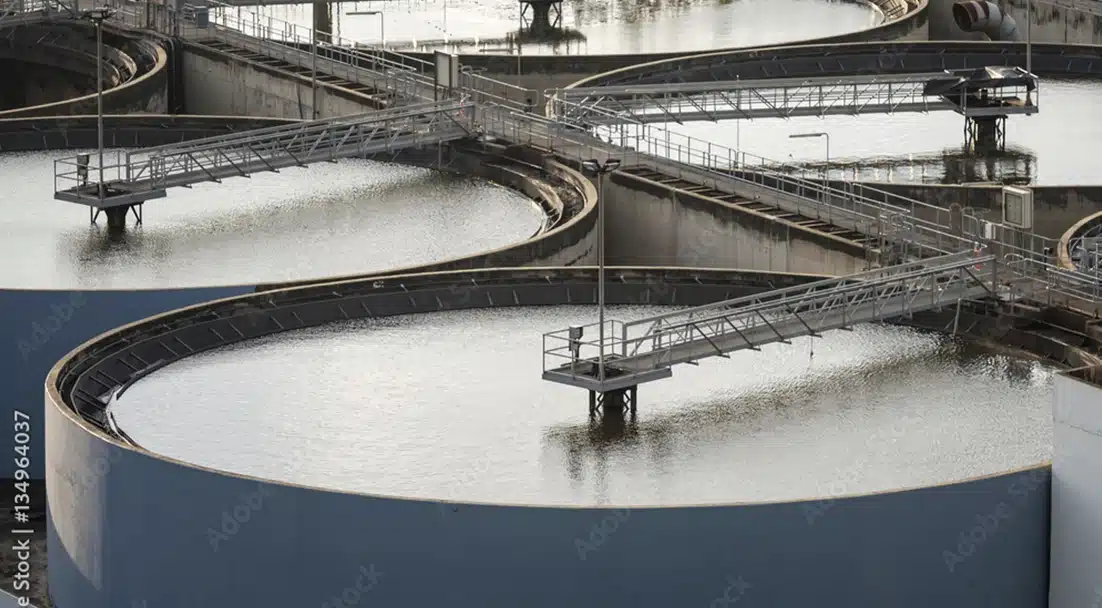
Industrial wastewater that cannot meet discharge limits is collected and treated at permitted facilities by neutralization, precipitation, filtration or biological treatment. Treated effluent is discharged under permit and the resulting sludge is managed as waste.
Source: 40 CFR Part 264 Subpart Q, and Clean Water Act pretreatment standardsStreams we handle
- Metal bearing rinse water from plating and finishing
- Spent acids and caustics requiring neutralization
- Oily water and emulsions from industrial operations
- Tank and vessel cleaning water
- Contaminated groundwater from remediation
- Process water exceeding discharge permit limits
The sludge is the real waste
Wastewater treatment concentrates contaminants rather than destroying them. Metals removed from a rinse water end up in the filter cake, and that filter cake frequently carries toxicity codes the original water did not.
For plating operations this is exactly the F006 problem. Treatment produces a listed sludge, and the cost of managing that sludge often exceeds the cost of treating the water. Reducing drag out at source reduces both.
Reduce the volume before treating it
Evaporative recovery, ion exchange and closed loop rinsing cut the volume of wastewater generated and the metal reaching treatment. On a plating line these measures frequently pay for themselves in reduced sludge disposal alone.
See plating solution recoveryCommon questions
Can I discharge to the sewer instead?
Only within your pretreatment permit limits. Discharging outside those limits is a Clean Water Act violation and is separately enforceable, frequently by the sewer authority before the environmental regulator.
Is treated water still hazardous?
Properly treated effluent meeting discharge standards is not. The sludge and residues are separately assessed and frequently are hazardous, particularly where metals were removed.
Do you treat on site?
We collect and route to permitted treatment. On site treatment under the generator provisions is possible for some streams, and we will say when that is the more sensible option for you.
Related services
Not sure how this applies to your site?
Send a profile, an old manifest, or photographs of the drums. A technical professional will tell you where you stand.
This page summarizes federal requirements and is not legal advice. State programs can be more stringent than the federal baseline. Verify against current federal and state regulations before acting. Last reviewed September 2026.