
Waste codes
D002: corrosivity waste
The RCRA characteristic code for corrosivity. What the test is, what carries it, and how it is treated.
D002 is the RCRA waste code for corrosive waste. An aqueous waste is D002 if its pH is at or below 2, or at or above 12.5. A liquid is also D002 if it corrodes SAE 1020 steel faster than 6.35 mm per year at 55 C.
Source: 40 CFR 261.22How D002 is determined
Any one of these makes the waste D002. The generator carries the duty to determine under 40 CFR 262.11.
- Aqueous waste with pH at or below 2.0
- Aqueous waste with pH at or above 12.5
- Liquid that corrodes SAE 1020 steel faster than 6.35 mm (0.250 inch) per year at 55 C (130 F)
- The characteristic applies to aqueous waste and liquids only, not to solids
Process knowledge can substitute for testing where the inputs and process are documented, but the basis has to be recorded and retained.
Common D002 streams
The streams that most often carry this code:
Spent pickling and etching acids
Caustic cleaning and stripping baths
Battery acid and electrolyte
Spent sulfuric and hydrochloric acid
Alkaline parts washer solutions
Boiler and cooling tower cleaning waste
How D002 waste is treated
Neutralization and permitted wastewater treatment for dilute streams. Concentrated spent acids and caustics are frequently reclaimable, which is cheaper than destruction and worth pricing first.
See hazardous waste disposalCommon questions
Is all corrosivity waste automatically hazardous?
Only if it meets the definition at 40 CFR 261.22. The characteristic is a specific test with a specific threshold, not a general description. A stream that sounds corrosiv can still pass.
Can D002 waste be mixed with non-hazardous waste?
Deliberate dilution to escape a characteristic is prohibited under 40 CFR 268.3. If a characteristic waste is mixed with solid waste and the mixture still exhibits the characteristic, the whole mixture is hazardous.
What documentation travels with D002 waste?
A Uniform Hazardous Waste Manifest, a land disposal restriction notification, DOT shipping papers, and a certificate of destruction or treatment from the receiving facility.
Related services
Not sure how this applies to your stream?
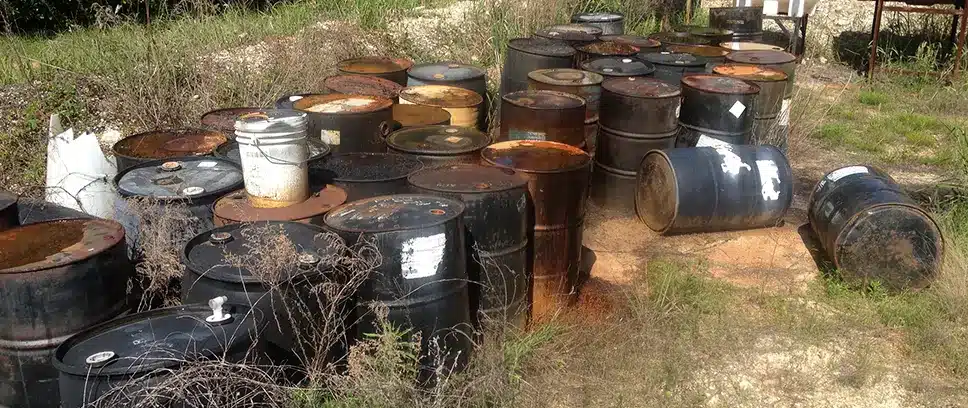
Send a profile, an old manifest, or photographs of the drums. A technical professional will tell you what you are holding.
This page summarizes federal requirements and is not legal advice. State programs can be more stringent than the federal baseline. Verify against current federal and state regulations before acting. Last reviewed September 2026.