
Recycling and recovery
Battery recycling
Lead acid, lithium, nickel cadmium and the handling requirements that differ by chemistry.
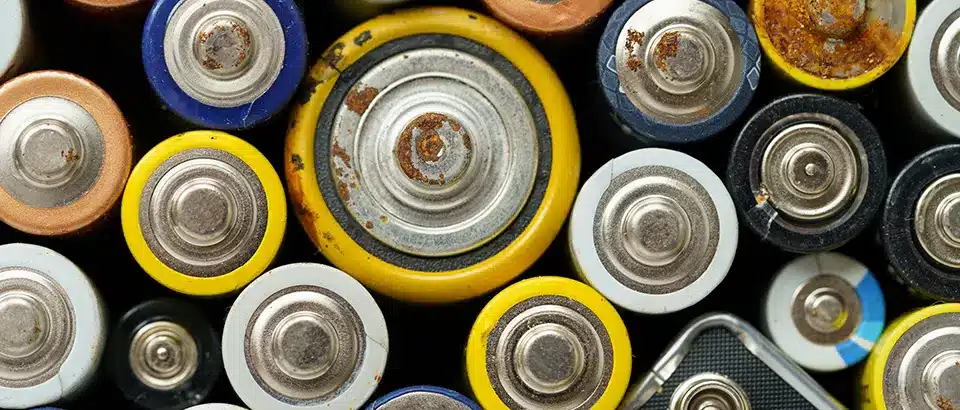
Battery recycling routes depend on chemistry. Lead acid batteries are reclaimed under 40 CFR Part 266 Subpart G, while lithium, nickel cadmium and nickel metal hydride are typically managed as universal waste under Part 273.
Source: 40 CFR Part 266 Subpart G, and Part 273By chemistry
Lead acid
Reclaimed under Part 266 Subpart G. Secondary smelting recovers lead and polypropylene. The most successfully recycled product in the country.
Lithium ion
Universal waste in most states. Terminals must be taped or bagged individually, because short circuit is the fire risk.
Nickel cadmium
Universal waste. Cadmium recovery by thermal processing. D006 if managed as hazardous waste.
Nickel metal hydride
Universal waste, recovered for nickel value. Lower hazard than nickel cadmium.
Alkaline
Generally non hazardous since mercury was removed from the formulation, though several states still require recycling.
Lithium is a fire problem before it is a waste problem
Damaged, defective or recalled lithium batteries are the fastest growing fire risk in waste handling. A short circuited cell can enter thermal runaway, and a fire in a container of batteries is extremely difficult to extinguish.
Tape the terminals or bag each battery individually. Store damaged cells separately in non combustible containers. Declare damaged lithium batteries when arranging transport, because the shipping requirements differ materially and the transporter needs to know before the load is built.
Common questions
Are lead acid batteries hazardous waste?
They would be D008 for lead, but batteries sent for reclamation are managed under the lighter requirements of 40 CFR Part 266 Subpart G. Nearly all lead acid batteries are recycled.
How should lithium batteries be packed?
Terminals taped or each battery bagged, packed to prevent movement and short circuit, in a container appropriate to the quantity. Damaged or recalled cells go separately with specific packaging and declaration.
Do batteries count toward generator status?
Not when managed as universal waste under Part 273, or as lead acid reclamation under Part 266. That is one of the practical reasons to use those paths.
Related services

Not sure how this applies to your site?
Send a profile, an old manifest, or photographs of the drums. A technical professional will tell you where you stand.
This page summarizes federal requirements and is not legal advice. State programs can be more stringent than the federal baseline. Verify against current federal and state regulations before acting. Last reviewed September 2026.